

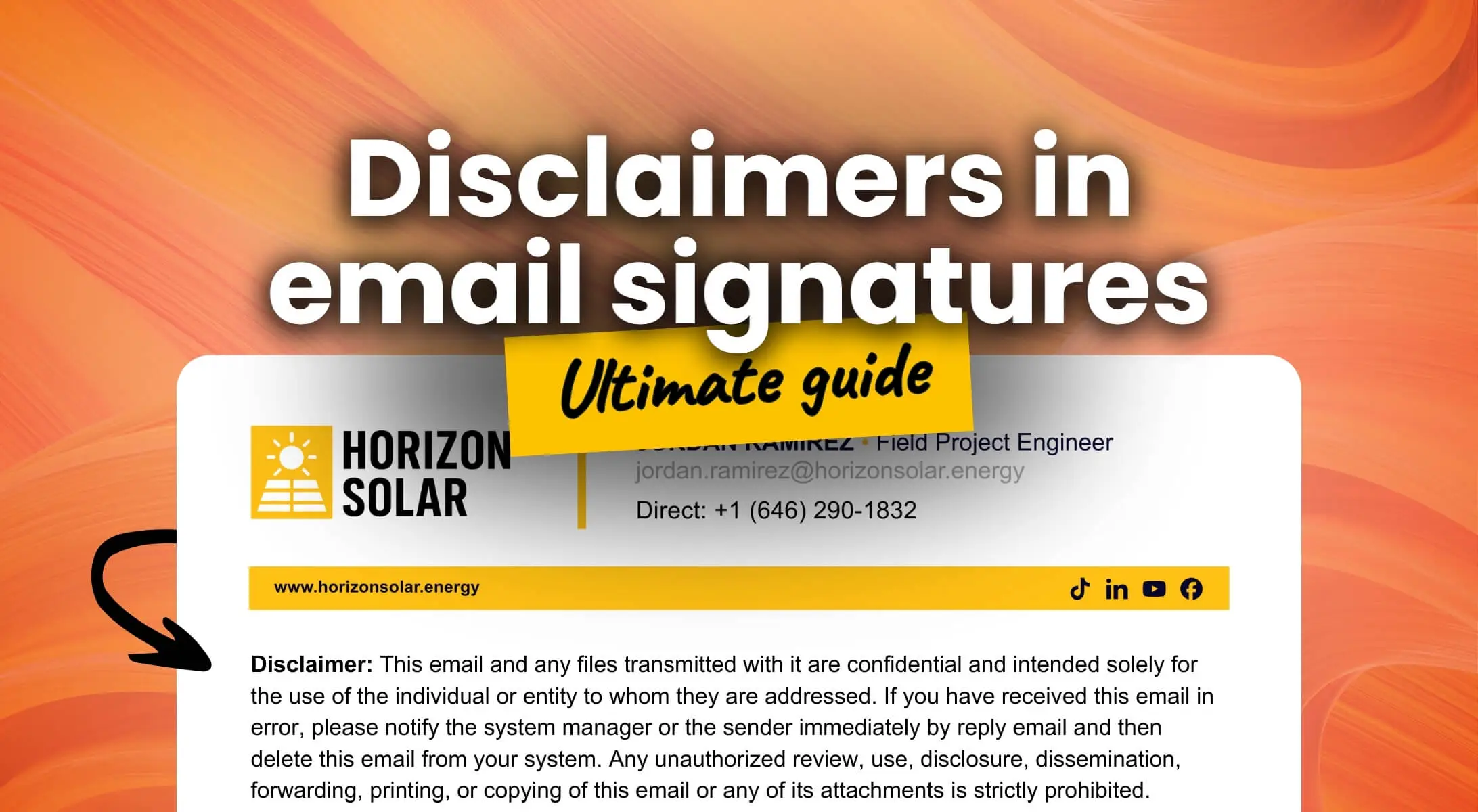
An email disclaimer is a statement of policy, a mark of professionalism, and a practical tool for managing risk in every message you send. It’s a sign that your organization is diligent, credible, and stands behind its communications. This guide cuts through the legal jargon to give you a clear, practical understanding. We’ll cover what a disclaimer in email is for, whether it’s legally necessary, and how you can manage it effectively across your whole organization to make a meaningful impression.
What Is the Email Disclaimer?
An email disclaimer is a notice added to an outgoing email to limit liability and communicate important information. While it can be set up in various ways within email client settings or environments (e.g., as a company-wide footer in Google Workspace), a disclaimer is most commonly—and effectively—included as part of a professional email signature. Integrating the email disclaimer directly into the email signature makes it a seamless part of daily communication.
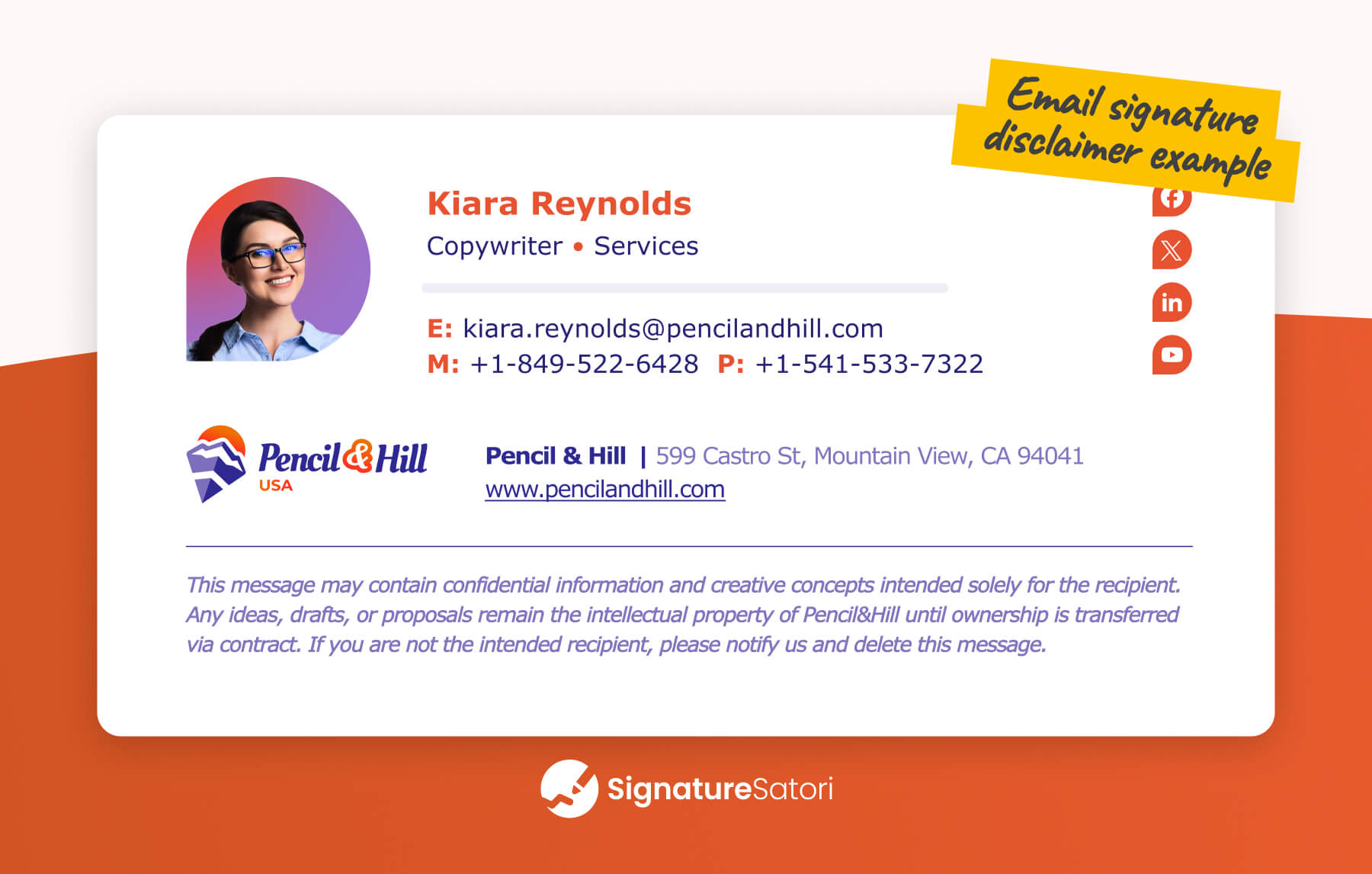
While its legal power can be debated, its purpose is clear and multifaceted. Think of it less as an unbreakable shield and more as a clear sign of your company’s intent and professionalism.
The primary functions of an email disclaimer
- Protecting Confidentiality: This is the most common use. It warns recipients that the email’s contents are sensitive and not for unauthorized sharing, which is crucial if a message is sent to the wrong person.
- Limiting Liability: Disclaimers aim to protect your organization from responsibility for errors, omissions, or negligent advice within an email.
- Preventing Accidental Contracts: In sales and negotiations, a disclaimer can clarify that an email exchange does not form a binding contract, preventing informal chats from creating unintended legal obligations.
- Meeting Regulatory Compliance: For industries like healthcare or finance, and for any company handling EU data (GDPR), disclaimers are a practical way to demonstrate adherence to the law.
- Distancing from Employee Opinions: A disclaimer can state that an employee’s views are their own, protecting the company from liability for controversial or personal statements.

Do I Need an Email Disclaimer?
This is a common question for many organizations. While a solo freelancer might not see the immediate need, for any business – especially those in regulated industries or with multiple employees, the answer is a definite yes. A disclaimer email isn’t just about legal protection, it’s about control, consistency, and professionalism. It serves as powerful proof that you have systems in place to protect confidential information – a sign of diligence that can be very persuasive to a court or a regulator.
Email Disclaimers and the Law
Legally, an email disclaimer isn’t a binding contract because the recipient never agrees to its terms. Its real value, however, comes from serving as a formal notice. This notice demonstrates to a court or regulator that you took reasonable steps to protect sensitive information. While specific email disclaimer requirements vary by industry, their presence significantly strengthens your position in any dispute.
So, while a disclaimer won’t magically make a non-confidential email privileged, its presence strengthens your case that you took reasonable steps to protect sensitive communications.
Email Disclaimer Examples
The right email disclaimer format depends on the message you need to send. A dignified, concise statement is always more effective than overly aggressive or lengthy text. Here are a few practical templates you can adapt.
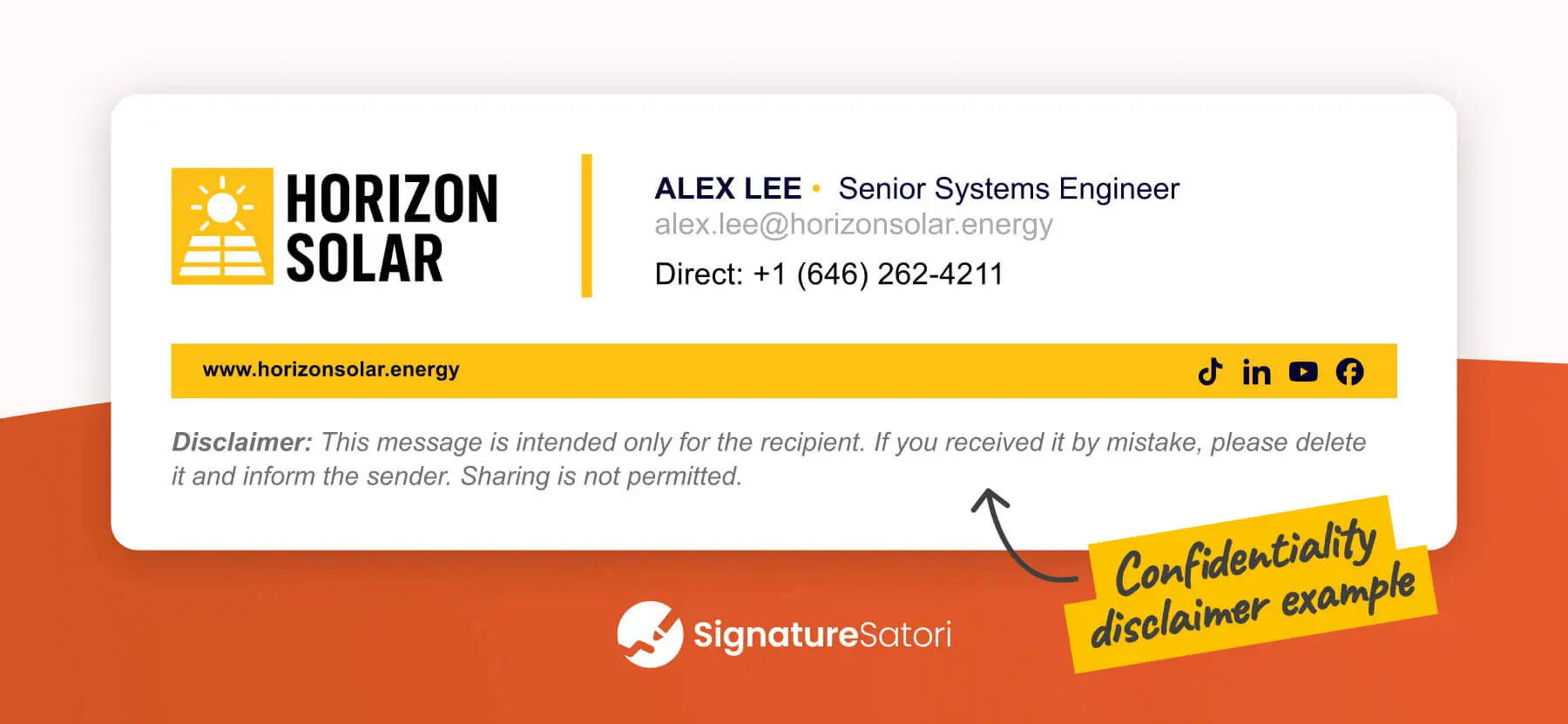
Confidentiality Email Disclaimer Template: This is the most common type, intended to protect sensitive information.
"This message is intended only for the recipient. If you received it by mistake, please delete it and inform the sender. Sharing is not permitted."Security and Virus Warning Disclaimer: This shifts some of the cybersecurity responsibility to the recipient.
"We take care to avoid viruses, but please check attachments yourself. The sender cannot accept responsibility for any damage caused."Non-Endorsement Email Disclaimer: This type of statement clarifies that the views expressed in the email are personal and may not represent the official position of the organization. It helps prevent any misunderstanding that the sender is speaking or acting on behalf of the company.
"The views expressed may not reflect those of [Company Name]. For full details, please see our official disclaimer at [Company Website]."Liability Disclaimer for Email: A disclaimer focused on limiting legal liability for advice or errors.
"Information in this email is for general purposes only and should not be relied upon as professional advice. No liability is accepted for errors or omissions."Marketing and Anti-Spam Disclaimer: Essential for commercial emails to comply with anti-spam laws.
"You are receiving this email because you subscribed to updates from [Company Name]. If you prefer not to receive future messages, please use the unsubscribe option."How to Manage Email Disclaimers Effectively
Expecting employees to manually add or update their disclaimers creates inconsistency. People forget, use outdated text, or alter the wording, which undermines the entire purpose. This is particularly challenging for messages sent from mobile devices.
The most effective way to ensure every email includes the correct notice is by integrating the disclaimer directly into the email signature. To do this professionally across an organization, a centralized email signature management tool is essential. A platform like SignatureSatori ensures every email leaving your company – from any device – is automatically appended with the correct, legally approved, and consistently branded disclaimer.
Conclusion
An email disclaimer, especially when integrated into a professional signature, may seem like a small detail, but it’s a significant one. It’s not just legal padding – it’s a statement of professionalism, a tool for risk management, and proof of your company’s diligence. While its legal standing can be complex, its practical benefits for building trust and ensuring consistency are clear.
By implementing a clear and centrally managed disclaimer strategy, you ensure every message your team sends is professional, compliant, and signed with confidence.
Frequently Asked Questions
What is an email disclaimer?
An email disclaimer is a block of text automatically added to the footer of an outgoing email. Its main purpose is to limit liability, protect confidential information, ensure regulatory compliance, and communicate the sender’s policies to the recipient.
Do email disclaimers hold up in court?
Their enforceability is questionable, as they are not a mutually agreed-upon contract. However, they can serve as important evidence that the sender took reasonable steps to notify the recipient of the information’s confidential nature, which can be a valuable factor in a legal dispute.
Are email disclaimers necessary?
For businesses, they are highly recommended and often necessary. They help manage risk, fulfill legal and email disclaimer requirements (like GDPR or HIPAA), and project a professional image.
What is the purpose of an email disclaimer?
Its purposes include asserting confidentiality, limiting liability for errors, preventing the accidental formation of contracts, meeting regulatory requirements, and warning about viruses.
What is the standard email disclaimer language?
This refers to both the specific wording and the actual language (e.g., English, French) used in the notice:
– Wording: It should be clear, concise, and professional, avoiding overly aggressive legal jargon.
– Language: The disclaimer should match the language of your email body. For international business, English is the global standard. However, in bilingual regions or when targeting specific local markets, using a bilingual disclaimer (e.g., English/Spanish) is often best practice.
Where should the email disclaimer be placed?
The best practice is to place the email disclaimer at the bottom of the email, directly below the sender’s signature block. This is the standard location where recipients expect to find such information.
What is the meaning of an email disclaimer?
The meaning is to establish the sender’s official position on the email communication. It signifies an attempt to control how the information is used, limit legal exposure, and demonstrate due diligence.
How do I add a disclaimer at the end of an email?
There are multiple ways to do this, but here are the two most common methods:
For Individuals: You can manually insert the text directly in your email client’s settings, usually within the field designed for an email signature.
For Companies: The most convenient method is to treat the disclaimer as an integral part of the email signature. Centralized email signature generator tools are typically designed for this purpose, offering features to insert email disclaimers easily. This ensures every employee’s email, sent from any device, automatically includes the correct, up-to-date disclaimer.
Can I use a free email disclaimer template or write my own?
Yes, you can draft your own text or use a free template found online (including the examples in this guide). However, for business use, it’s always best to have legal counsel review the wording to ensure it aligns with your specific risks and legal requirements.